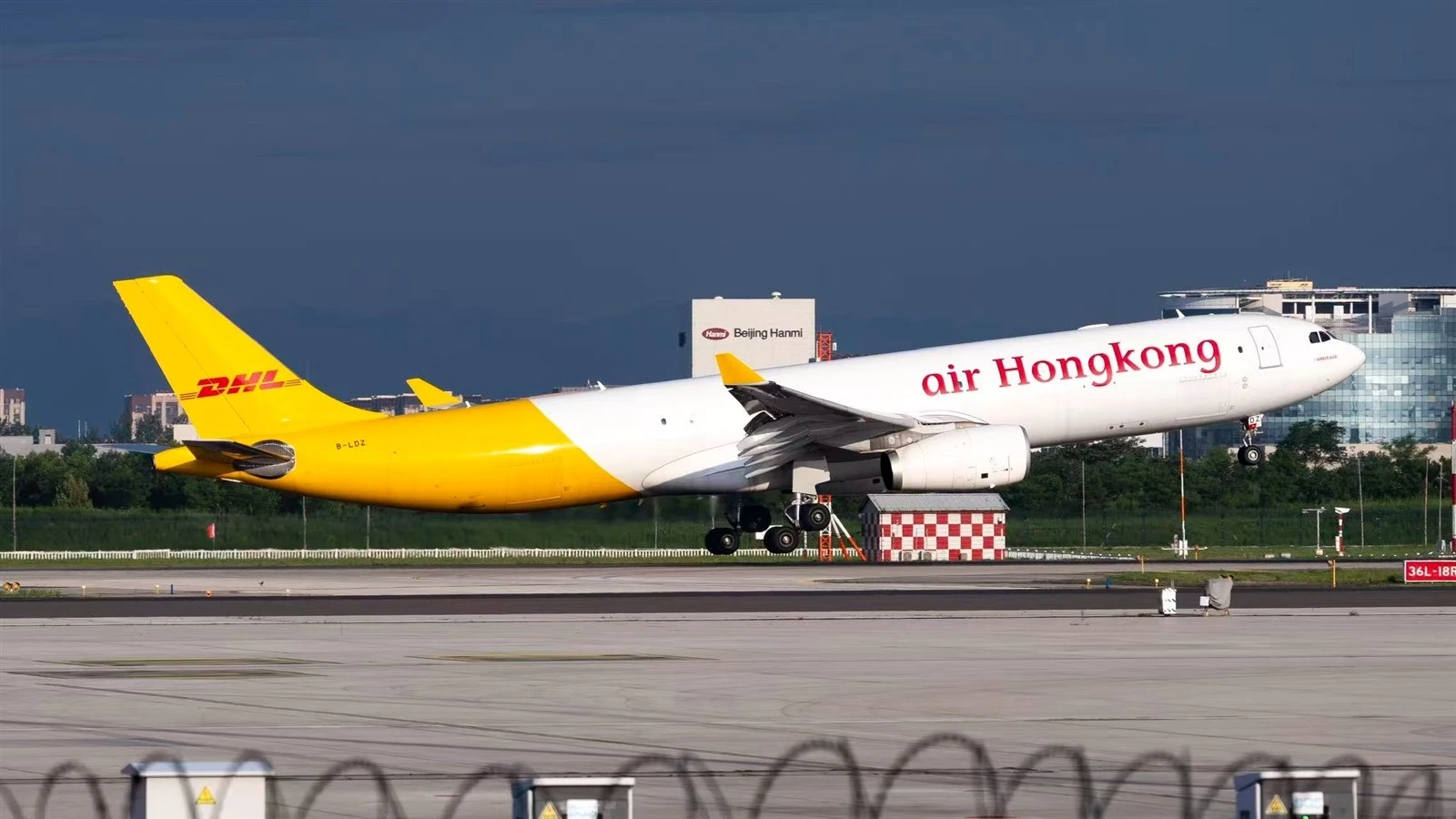
In early August 2026, the global air logistics industry released a string of major market signals. Overall global air cargo demand has outpaced available capacity by a notable margin; cargo sources on Asia-Pacific routes have undergone structural shifts. Leading cross-border logistics providers have launched affordable premium time-definite products, disrupting the established industry competition landscape. In addition, the world's first electro-synthetic sustainable aviation fuel compatible with existing airport infrastructure has completed a commercial passenger flight. Four core trends are unfolding simultaneously: supply-demand imbalance, intensifying market competition, profit erosion driven by high oil prices, and commercial breakthroughs in green fuel technologies. While industry profitability faces short-term headwinds, the medium-to-long-term industrial transition path remains clear. As the global core air cargo market, the Asia-Pacific region is undergoing an unprecedented window of structural reshaping.
Widening Supply-Demand Gap and Disruptive Restructuring of Asia-Pacific Cargo Composition
On August 2, the International Air Transport Association (IATA) first released key global air cargo data for June 2026, setting the fundamental market tone for this round of industrial updates. The data shows that global air cargo demand (CTK) rose by 8.5% year-on-year in the month, with international cargo demand climbing 9.6%. However, industry available cargo capacity (ACTK) increased by only 4.4% year-on-year. Demand growth has significantly outpaced capacity deployment, lifting the global cargo load factor to 46.9% month-on-month.
By region, North American carriers led global cargo growth at 13.1%, followed by Asia-Pacific carriers at 7.9% and European carriers at 6.9%. In terms of routes, the Asia-North America trunk route boasts the strongest growth momentum, complemented by Europe-Asia routes and intra-Asia routes. Rising demand is mainly driven by high-value tech goods, semiconductors and urgent shipments, supported by a 5.2% year-on-year expansion in global trade that sustains the air cargo market boom.
Nevertheless, profitability pressure is mounting beneath the market upturn. IATA Director General Willie Walsh stated that notable uncertainties hang over industry growth. Persistent geopolitical unrest in the Middle East and tightened US tariff policies will pose major risks to cargo operations in the second half of the year. Cost pressures remain significant: jet fuel prices fell 20% month-on-month in June but were still up sharply by 45.8% year-on-year. Sustained high fuel costs continue to squeeze profit margins for airlines and logistics providers' cargo divisions.
Yu Zhanfu, Vice President of Zhongda Consulting Group and lead for the transportation, logistics and tourism sector, commented to China Business Journal on the widening supply-demand gap. Strong global air cargo demand and the growing disparity between demand and capacity strengthen the bargaining power of cargo facilities at Chinese airports. This presents an opportunity to accelerate commercial leasing for cold-chain and cross-border e-commerce cargo terminal expansion. "The Asia-Pacific-North America trunk route is currently the core growth corridor. Major hub airports in China should prioritize additional cargo flight approvals and optimize overnight slot allocation."
Amid rising overall cargo demand, the Asia-Pacific region is seeing a transformative shift in cargo composition, directly leading to polarized supply and demand for space on regional routes. The August Asia-Pacific freight market report issued by Dimerco fully validates this industry trend. It notes that air cargo space departing from Southeast and Northeast Asia is largely occupied by AI hardware and semiconductor shipments. Traditional cross-border e-commerce has lost its position as the top cargo source for Asia-Pacific air freight, creating stark divergence across regional route conditions.
In Northeast Asia, surging semiconductor export demand from Chinese Taiwan and South Korea has pushed freight rates from Chinese Taiwan to North America and other Asian destinations higher, with August route load factors approaching 90%. Outbound cargo space from South Korea is also extremely tight. Dimerco advises shippers booking departures from Chinese Taiwan or South Korea to secure cargo slots two to three weeks in advance.
In contrast, Europe-bound e-commerce cargo from mainland China has dropped markedly after the EU and US scrapped tax exemptions for cross-border small parcels. Cargo space on corresponding China-Europe routes has loosened, offering an alternative capacity solution to the high-priced trunk routes out of Chinese Taiwan and South Korea.
Yu Zhanfu acknowledged: "The AI hardware freight boom is reshaping supply and demand across Trans-Pacific routes. Cargo carriers in mainland China face dual challenges: competition for cargo space by tech shipments departing Chinese Taiwan and South Korea, coupled with pressure on outbound freight rates from mainland China. Chinese airlines must accelerate long-term BSA contract partnerships with semiconductor supply chain enterprises. They should also tap growth in domestic high-tech cargo driven by China's AI infrastructure investment and secure corresponding route resources at an early stage."
Escalating Competition in Time-sensitive Freight and Long-term Transition Opportunities Enabled by Sustainable Aviation Fuel