

Why Choose Us
In the Yangtze River Delta region, where China's economy is growing the fastest, Wuxi, the beautiful shore of Taihu Lake, is home to Wuxi Aviation Ground Equipment Co., Ltd., a national high-tech enterprise specializing in the research, production and sales of air cargo equipment products. We specialize in producing Container Metal Door, Aviation DPE Container, LD8 Container, Airline Shipping Containers, AKE Air Cargo Container, Aviation Container, LD2 Air Cargo Container, and other Air Cargo Container.
Quality Assurance
Our products have passed CAAC CTSOA, CAAC PMA, CAAC MDA, FAA TSOA LODA, CASA ASTO DA, ISO9001:2015, ISO14001:2015, ISO45001:2018, AAA Credit Rating, Ground equipment testing certification of China National Machinery Research Institute, Multimodal transportation industry standard-setting unit, Provincial high-tech enterprise and other certifications.
Products Sell Well
We are exported to Singapore, Australia, Japan, Pakistan and other countries. It is one of the enterprises among similar companies in the china with the largest market share and the most complete varieties of products.
Wide Range of Applications
Our products are widely used in air cargo lift platform, mainly composed of transportation platform, lift structure, lock device, hydraulic system, electrical system, etc., is a combined device for cargo transportation.
Lifetime After-Sales Service
WXHD provides lifelong tracking service for products and offer product training and maintenance service to customers.
-

Container Metal Door
Shipping container doors are the entry and exit points of the container. They are typically located on the end of the container and are made of heavy-duty steel. These doors are designed to be strong Add to Inquiry -
Aviation DPE Container
An intermodal container, often called a aviation container, or a freight container, is a large standardized container designed and built for intermodal freight transport, meaning these containers can Add to Inquiry -
AKE Aircraft Container
AKE containers are equipped with secure locking mechanisms to prevent cargo from shifting during transit. These mechanisms help maintain the stability of the aircraft and protect the cargo from Add to Inquiry -
AKE Air Cargo Container
With the AKE being the most widely used container in the air cargo business, WXHD has over the years developed a formidable range of this vital air cargo transport tool. Our standard products are Add to Inquiry -
Aviation ALF Container
An aviation ALF container is a specialized type of container used in the field of aviation for the purpose of transporting a wide range of goods and cargo via aircraft. These containers are designed Add to Inquiry -
AKH ULD Container
The AKH ULD container is a means of air transportation. It enables cargo to be transported safely, quickly and efficiently on passenger and cargo aircraft. Add to Inquiry -
AAY Container
The AAY Containers are typically constructed from durable materials such as aluminum alloy materials. This construction ensures the containers can withstand the rigors of air travel and cargo Add to Inquiry -
DQF Container
DQF containers play a critical role in modern air cargo logistics by enabling efficient loading, secure transport, and organized handling of various types of goods. Their standardized design and Add to Inquiry -
Aviation DPE Container
Aviation DPE Container is a specialized container designed for transporting various types of cargo within an aircraft. ULD containers are a critical component of air cargo logistics, allowing for Add to Inquiry -
LD2 Air Cargo Container
One kind of container called LD 2 air cargo container is used to carry different kinds of cargo inside of airplanes. ULD containers are an essential part of air cargo logistics because they maximize Add to Inquiry -
LD3 Air Cargo Container
LD3 Air Cargo Containers are equipped with secure locking mechanisms to prevent cargo from shifting during transit. These mechanisms help maintain the stability of the aircraft and protect the cargo Add to Inquiry -
LD3 Aviation Container
With the LD3 being the most widely used aviation container in the air cargo business, WXHD has over the years developed a formidable range of this vital air cargo transport tool. Our standard Add to Inquiry

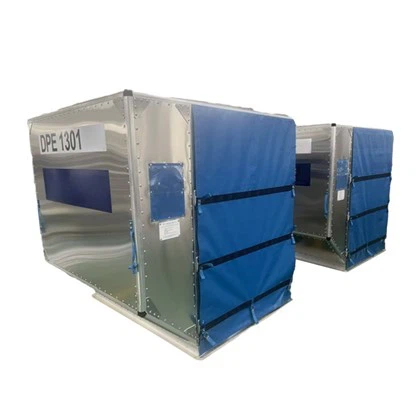


What is Air Cargo Container
An airline unit or unit load device (ULD) is a pallet or a container which is used to hold loose freight to be shipped via airfreight. Airline units are used to protect your goods in transit and to speed transitions through customs and airports. If you want to know the specifications and prices of Air Cargo Container, please contact us!
Advantages of Air Cargo Container
The Fastest Shipping Method
When your goods need to be moved quickly, air freight containers are the best mode of transportation when compared with the sea freight or road transport. The travel time is reduced in the air transport.
Highly Reliable and Departure Times
Due to the fixed schedules of the airlines, the arrival and departure of the goods sent for transportation is highly reliable. In case, a flight is missed, it wouldn't cause much delay. There are usually other flights as well. The flights are departing every hour.
Send Your Cargo Almost Anywhere
Most of the airlines have bigger network of destinations. They cover almost the entire world. You can send air freight containers anywhere.
Low Insurance Premium
Since, the travel time of the air cargo is comparatively small, the insurance premium is also low. It is an irrefutable fact that the air freight is expensive, however, there is saving in terms of lower insurance costs.
Security and Reduced Risk of Theft
Shipment through air offers the benefit of a high level of security. The airport safety controls over cargo are secured. Chances of theft and damage in this type of transportation is very low.
Less Need For Warehousing and Fewer Items in Stock
Clearance of the cargo is just matter of hours. With the quicker transit times of air freight, there is less need of warehousing. There is no need to keep items in stock.
Types of Cargo are Transported By Air
General Cargo
General cargo are items that do not fall into the Special Cargo categories and that do not require any extra precautions or special handling during air transport. These types of items are retail and most consumer goods (with the exception of mobile phones, tablets and laptops) , dry goods, hardware, textiles, and more. Think of your average, everyday objects; most of those would fall into the general cargo area.
Special Cargo
Special cargo is where things get a little more complicated. Special cargo are goods that, due to their nature, weight, dimensions and/or value, may have specific requirements including packaging, labelling, documentation and handling through the transport chain. The transport of these goods are addressed through specific regulations that must be followed when preparing, offering, accepting and handling this cargo. Items include dangerous goods, live animals, perishable cargo, wet cargo, time and temperature sensitive products among others. To ensure that there are globally harmonized standards that ensures the safe and facilitates of these products, IATA has three Boards: the Dangerous Goods Board (DGB), Time and Temperature Working Group (TTWG), and the Live Animals and Perishables Board (LAPB), which manage the standards and guidance related to the transport of these products.To learn more about this special cargo, let's break it down.
Shipping Dangerous Goods
While some dangerous goods are too dangerous for transport by air except under very detailed allowance by the civil aviation authority, many can only be transported on cargo-only aircraft, and others can be transported on both cargo and passenger aircraft. No matter which type of aircraft the dangerous goods are shipped on, there are always specific requirements that must be followed.
When considering limitations for shipping dangerous goods it is never acceptable to ship any substance that is likely to "explode, dangerously react, produce a flame or dangerous evolution of heat or dangerous emission of toxic, corrosive or flammable gases or vapours under conditions normally encountered in transport must not be carried on aircraft under any circumstance," per the IATA DGR.
There are still many other materials that may only be carried under very particular circumstances. These are considered "Dangerous Goods Forbidden Unless Exempted."
Other everyday items may not seem outwardly dangerous but need to be checked for hazardous components, such as battery-powered devices, breathing apparatus, and dental apparatus. This is why it is important that passenger check-in, cargo reservation, sales, and passenger reservation staff all be provided with appropriate information so that they are well-informed and well-trained on what are dangerous goods.
Tips for Choosing the Right Air Cargo Container


Safe Container
The container used to transport your goods must first and foremost be equipped with a reliable, tamper-resistant design. Shackles and thick necks that are difficult to break with a blade will protect your container from breaking. Special hinged security locks are also convenient.
Quality Shipping Container
The constant tension on the container walls, bottom, and roof, as well as its operation under different conditions and temperatures, can lead to wear and tear. Therefore, to ensure durability, you should decide on a container whose material can withstand the short and long distances of shipping different cargoes. We recommend a corrugated container design to achieve universal rigidity and a long service life.
New Shipping Container Vs. Old Shipping Container
The age of your container is an important factor to consider. Used containers are typically cheaper than new containers, but they may require more frequent inspections and repairs. Obviously, new containers are more durable and stable, but used containers are a great solution for storing goods in warehouses. In this regard, you should note that some common groups of goods do not require exclusively new containers, so this is an issue you can save money on.
Leasing Vs. Owning a Container
For an accurate understanding, let's start with the question, "How much is it to buy one container?". If your business intends to scale up and carry out regional or international trade and logistics operations, it is worth planning to invest in a container: A 20ft dry container can cost from $1,500 to $3,500, and a 40ft high cube (HC) container can cost between $2,500 and $6,000. This way, you get long-term benefits and even the ability to resell containers to companies that scrap them after use. However, leasing containers is also popular because of its advantages: cost savings and the absence of ongoing maintenance responsibilities.
Different Types of Shipping Containers
Standard shipping containers, high-cube, open-top, flat-rack, platform, refrigerated, bulk, and tank-all of them are designed to transport specific cargo better. You can learn about all these types in our guide to make an informed choice.
More Characteristics of Containers
The most commonly used sizes for cargo containers are 20ft and 40ft. There are also 10ft and 45ft containers available. The small sizes prevail due to their compactness, and the large ones are adapted for heavy or large lightweight cargo, and can also be equipped with a high cube. Learn more about the properties of the containers and choose the right size for your specific goods.
Container Insurance and Warranty Options
After the purchase or during the checkout, ask if these services are mandatory to avoid additional costs. You can optimize your logistics budget by working with providers that offer such services as leasing and purchasing containers.
How to Maintain Air Cargo Container
Keep it on a Flat Surface
Make sure the container is always kept on a completely flat surface. Wherever you are storing a container, check the ground with a spirit level to make sure it's flat. Some people prefer to keep their containers on concrete paving slabs or railway sleepers to prevent moisture from accumulating under the container. Always keep containers in well-drained areas to avoid corrosion.
Lubricate Door Hinges
On most shipping containers, the only moving parts are a single set of doors on one side. Since this is an essential part of the container, it's important to look after the door hinges and ensure they are clean and well-lubricated. By carrying out this type of regular maintenance, you make sure your container hinges won't stick or bend when opening the container.
You should clean the door hinges with a commercial-grade steel cleaner. This liquid removes any dust, grit, or dirt on the hinges and prevents them from getting stuck. After doing this, apply a lubricating spray such as WD-40 to ensure the doors swing open easily.
Remove Dirt and Water
A shipping container is essentially a kind of portable storage room. Just as people clean warehouses and long-term storage rooms, it's necessary to clean containers. Simply cleaning a container with a commercial detergent and a high-pressure water hose removes any potential contaminants that could damage the goods to be stored inside. After cleaning, remove all the water and leave it as dry as possible. Too much water can create an environment conducive to rusting.
Treat Rust Immediately
Contrary to popular belief, shipping containers aren't entirely rust-proof. Even containers made from Corten Steel, which has high-corrosion resistant properties, are also sensitive to salty air environments and water. Both standard containers and aluminum High Cubes are at risk of rusting problems.
You should regularly examine the interior and exterior of the container and look for areas that have been scuffed, scratched or cut. Treat these areas by painting, sealing, and rustproofing as quickly as possible.
Deal With Dents
One of the most important things to keep in mind when dealing with containers is maintaining their structural integrity. Check the roof because this is an area that gets dented very often. When stacking containers on top of the other, keep the weight on the corners because this limits the pressure on the roof. When containers are stacked on top of each other, too much weight in the center can cause dents.
The problem with dents is they can collect water which leads to corrosion. You can fix dents with a hammer and a dolly from the inside. Once the dent has been repaired, check the exterior to see if the paint has cracked or chip. You should fix paint issues too, because they also lead to corrosion. Treating the area with rust-proof paint should take care of it.
Fix the Refrigerator Unit
When preparing for shipping container transportation, it's important to store your goods correctly to avoid possible damage. If you are transporting food or medicines, a refrigerator unit is an excellent option for preserving your goods and prolonging their shelf life. For products such as food and medicine, keeping the inside of the container cool is also important for the health and safety of consumers.
A refrigerator unit should be inspected regularly. If a unit breaks down during a journey, it could be costly. Also, periodically examining and maintaining a refrigerator unit could avoid expensive repairs down the line. Have a qualified electrician check the unit's insulation, condenser unit, and refrigerant lines to make sure they're working properly.
Watch Out for Condensation
Moisture and condensation building up inside containers is a common problem that can lead to millions of dollars in losses. To avoid this, make sure your containers are well ventilated and consider installing dehumidifiers or desiccants to remove excess moisture.
Certificate

Our Factory


Frequently Asked Questions
Wuxi Aviation Ground Equipment Co., Ltd. is well-known as one of the leading air cargo container manufacturers and suppliers in China. Please rest assured to buy or wholesale discount air cargo container for sale here from our factory. For price consultation, contact us.
Air Cargo Shipping Containers, AKH ULD Container, Aviation DPE Container